

Plant & Horticulture
Drought-Tolerant Plants Perfect for Melbourne Gardens
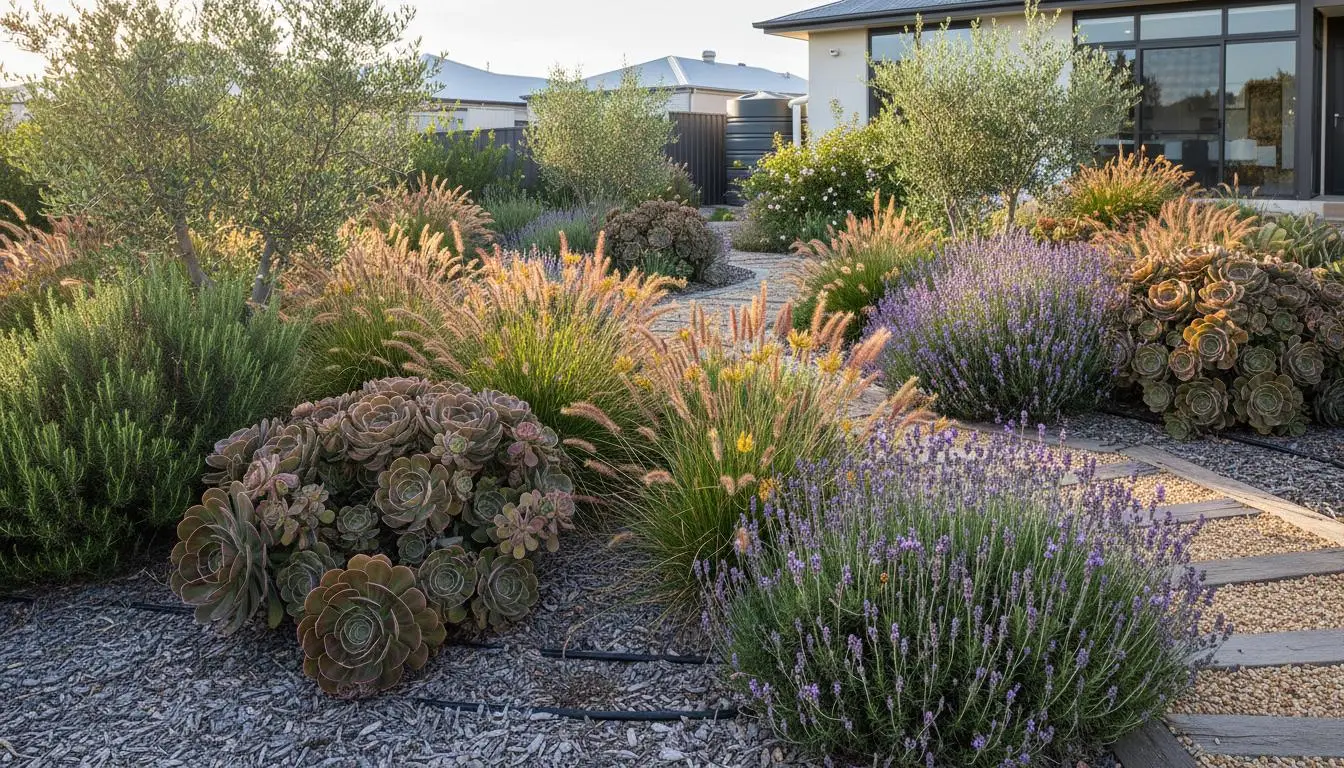
Water-wise gardens don't mean sparse landscapes. Here are the drought-tolerant plants that genuinely thrive in Melbourne's eastern suburbs, tested across 27 years of dry summers.
Why Should Melbourne Gardeners Think About Drought Tolerance?
Melbourne's climate makes drought tolerance not optional but essential for sustainable gardening. Our summers are hot and often dry, water restrictions are a recurring reality, and even in years with reasonable rainfall, the periods between significant rain events can stress plants that aren't adapted to dry conditions. The good news is that drought-tolerant gardens can be extraordinarily beautiful, often more so than water-hungry alternatives.
In 27 years of managing gardens across Melbourne's eastern suburbs, I've watched the conversation about water-wise gardening shift from compromise to opportunity. The gardens I'm most proud of today are ones where drought tolerance was a design principle from the beginning, not an afterthought. These gardens don't just survive dry summers, they look their best in them, because the plants are doing what they evolved to do.
Which Australian Natives Handle Dry Conditions Best?
Not all Australian natives are drought-tolerant, and not all drought-tolerant natives look good in a suburban garden. The ones I recommend for the eastern suburbs have been tested across years of Melbourne summers and earned their place through consistent performance.
Westringia fruticosa is my first recommendation for any client wanting a drought-tolerant garden with structure. It clips into beautiful soft hedges, produces delicate white or mauve flowers through much of the year, and once established, barely notices a dry summer. I've used it extensively in gardens across Surrey Hills and Kew as an alternative to thirstier exotic hedging, and it never disappoints.
Correa varieties, particularly 'Dusky Bells' and Correa alba, flower through autumn and winter when most gardens are quiet, handle the heavy clay soils common through Camberwell and Glen Iris, and need almost no supplementary watering once their root systems are established. They're compact, attractive, and genuinely useful in a garden design context.
Banksia in its smaller garden forms, particularly Banksia spinulosa and the cultivar 'Birthday Candles', provides extraordinary texture and flower interest. The flower spikes attract honeyeaters and native bees, and the spent cones add sculptural interest long after flowering. They need reasonable drainage, so I use them more freely on the lighter soils through Canterbury than in heavy clay areas.
Lomandra longifolia has become ubiquitous in commercial landscaping, but in a garden setting, well-placed lomandras provide excellent drought-tolerant structure. The cultivar 'Tanika' is my preference for its finer texture and compact habit. Mass-planted with sufficient spacing, it creates a flowing, grassland effect that looks natural and handles summer heat without flinching.
Why Do Mediterranean Plants Thrive in Melbourne?
Melbourne's climate has genuine parallels with the Mediterranean basin, hot, dry summers and cool, wet winters. Plants from that region have evolved for exactly these conditions, which is why they perform so reliably here.
Lavender is the obvious starting point, and for good reason. Lavandula angustifolia varieties perform best in our conditions, though I've had excellent results with L. x intermedia 'Grosso' for larger plantings. The key is sharp drainage, lavender in heavy clay will sulk and rot. In the better-drained soils through parts of Canterbury and Balwyn, it thrives with minimal attention. In heavier soils, I plant it into raised beds or mounded soil amended with coarse sand and grit.
Rosemary is equally reliable and more versatile than most people realise. The prostrate forms make excellent ground covers for banks and retaining walls, while upright varieties like 'Tuscan Blue' create aromatic informal hedges. A rosemary hedge along a path edge releases fragrance whenever someone brushes past, asmall pleasure that clients consistently mention.
Olive trees (Olea europaea) have become statement plants in many eastern suburbs gardens, and they deserve the popularity. Their silver-green foliage catches the light beautifully, they develop extraordinary character with age, and they're virtually indestructible once established. I've planted olives in gardens from Balwyn to Hawthorn, and even through the harshest summers they show no signs of stress. Choose fruitless cultivars if you want to avoid the mess of fallen olives on paving.
Santolina, both the grey-leaved S. chamaecyparissus and the green-leaved S. rosmarinifolia, provides beautiful low edging that handles full sun and dry conditions perfectly. The silver-grey forms are particularly effective against darker foliage or stone, and they clip neatly for a formal effect. They do need cutting back hard in late winter to prevent them becoming leggy, but that's a small price for such a reliable performer.
What Role Do Grasses and Structural Plants Play?
Ornamental grasses and architectural plants give drought-tolerant gardens their character. Without them, a water-wise planting can look flat. With them, it develops the layers and movement that make a garden feel complete.
Miscanthus sinensis varieties, particularly 'Morning Light' with its fine silver-edged leaves and 'Gracillimus' with its elegant arching habit, provide height, movement, and spectacular autumn plume flowers. They die back in winter, which some people find untidy, but I leave the dried stems standing through the cold months for their tawny winter texture and cut them back hard in late August before new growth emerges.
Dianella in its various forms is one of the most versatile drought-tolerant plants for Melbourne gardens. The blue flowers and metallic berries are attractive, the strappy foliage provides year-round structure, and the plants are remarkably tough once established. 'Little Rev' and 'Cassa Blue' are the cultivars I use most, compact enough for borders but substantial enough to make an impact.
Agave and the larger succulents play a different role: they're sculptural accents rather than bulk planting. A single well-placed Agave attenuata can anchor an entire garden bed, providing a focal point that looks striking year-round and needs essentially no maintenance or supplementary water. I use them sparingly in the right settings, such as a contemporary garden in Kew or the entrance courtyard of a modern home in Balwyn, where their architectural quality suits the aesthetic.
Phormium (New Zealand Flax) bridges the gap between grasses and structural plants. The bronze and deep burgundy forms add drama to a planting scheme, and they handle dry conditions well once established. As with agave, restraint is important, one or two strategically placed phormiums create impact. Too many creates visual noise.
How Do Mulch and Soil Preparation Reduce Water Needs?
Mulching is the single most effective thing you can do to reduce water consumption in any garden, drought-tolerant or otherwise. Research published in Frontiers in Agronomy in 2024 found that mulching can reduce soil moisture evaporation by up to 50%. In practical terms, that means a well-mulched garden needs roughly half the supplementary watering of an unmulched one.
I apply organic mulch, typically composted hardwood or pine bark, at a depth of 75 to 100 millimetres across all garden beds as part of our mulching service. This layer insulates the soil from temperature extremes, suppresses weed germination, and breaks down gradually to feed the soil biology below. The key is keeping mulch away from plant stems and trunks. Mulch piled against a trunk creates conditions for collar rot, which can kill even a healthy plant.
Soil preparation is equally important and often overlooked. Adding organic matter, such as compost, well-rotted manure, or composted green waste, to the soil before planting transforms its water-holding capacity. The heavy clay through parts of Glen Iris and Camberwell actually holds water well, but it holds it so tightly that plant roots struggle to access it. Adding organic matter through soil improvement creates the balance between moisture retention and drainage that most plants need.
For gardens on lighter, sandier soils, organic matter serves the opposite function, it increases the soil's ability to hold water rather than letting it drain straight through. Either way, the investment in soil preparation before planting pays dividends for years afterward.
How Do You Establish Drought-Tolerant Plants Successfully?
This is where many water-wise garden projects go wrong. Even the toughest drought-tolerant plant needs consistent water while its root system establishes. The "drought-tolerant" label describes the plant's long-term character, not its needs in the first twelve months.
I water new plantings regularly, typically twice weekly in warm weather, for the first growing season. During this time, roots are extending into surrounding soil, and the plant is building the deep root system that will sustain it through future dry periods. Reducing water too quickly forces the plant to develop shallow roots that leave it vulnerable to exactly the conditions you're trying to prepare it for.
After that first year, I begin gradually reducing supplementary watering. By the end of the second growing season, most genuinely drought-tolerant species should need little or no supplementary water except during extreme heat events.
Planting timing makes a significant difference. Autumn, from March through May, is the ideal window for establishing drought-tolerant plants in Melbourne. The soil is still warm enough for root growth, the cooler weather reduces transplant stress, and the winter rains provide natural irrigation through the establishment period. By the time the following summer arrives, the plant has had eight to nine months to settle in. Spring planting works too, but the approaching summer means the establishment window is shorter and supplementary watering more critical.
Deep, infrequent watering trains roots to grow downward rather than staying near the surface. I'd rather see a garden watered deeply once a week than lightly every day. The deep soak encourages roots to follow moisture down into the soil profile, building the kind of resilient root system that sustains a plant through weeks without rain.
What Are Melbourne's Current Watering Rules?
Melbourne's permanent water-use rules allow watering systems, including sprinklers, drip systems, and automatic irrigation, to operate only between 6 pm and 10 am (Melbourne Water). Hand-held watering with a trigger nozzle is permitted at any time. These rules apply year-round, regardless of water storage levels.
Understanding these rules matters for garden design. If your irrigation system can only run in the evening-to-morning window, plant selection and system design need to account for that limitation. Drip irrigation is generally more efficient than sprinkler systems for garden beds, delivering water directly to root zones with minimal waste. For lawns, efficient sprinkler coverage within the permitted window is usually sufficient.
In practice, a well-designed drought-tolerant garden with good mulching and soil preparation should need significantly less irrigation than a traditional garden, often just supplementary deep watering during extended hot, dry periods rather than regular daily or weekly irrigation.
Beauty Through Resilience
The most beautiful drought-tolerant gardens I've managed share a quality that's hard to describe but immediately recognisable, they look at ease. The plants aren't straining against their conditions or being propped up by constant intervention. They're growing naturally, in the way their genetics intended, and there's a calm confidence to that kind of garden.
Melbourne's climate is shifting, and the gardens that will look best in twenty years are the ones being planted now with resilience in mind. That doesn't mean abandoning every plant that likes a drink. It means making thoughtful choices, placing the few thirstier plants where irrigation reaches them easily, and filling the broader landscape with species that thrive on what Melbourne naturally provides.
A garden that needs less water isn't a lesser garden. In the right hands, it's a garden that works with its environment rather than against it, and that, to me, is better horticulture. To explore what's possible for your garden, book a free consultation.
Need Help With Your Garden?
Ready to put this advice into action?
Our diploma-qualified horticulturist and experienced team can help bring your garden vision to life. Book a free consultation to discuss your needs.
No pressure. No obligation. Just a conversation about your garden.