



Problem Solving
How to Fix an Overgrown Garden: Step-by-Step Recovery Guide
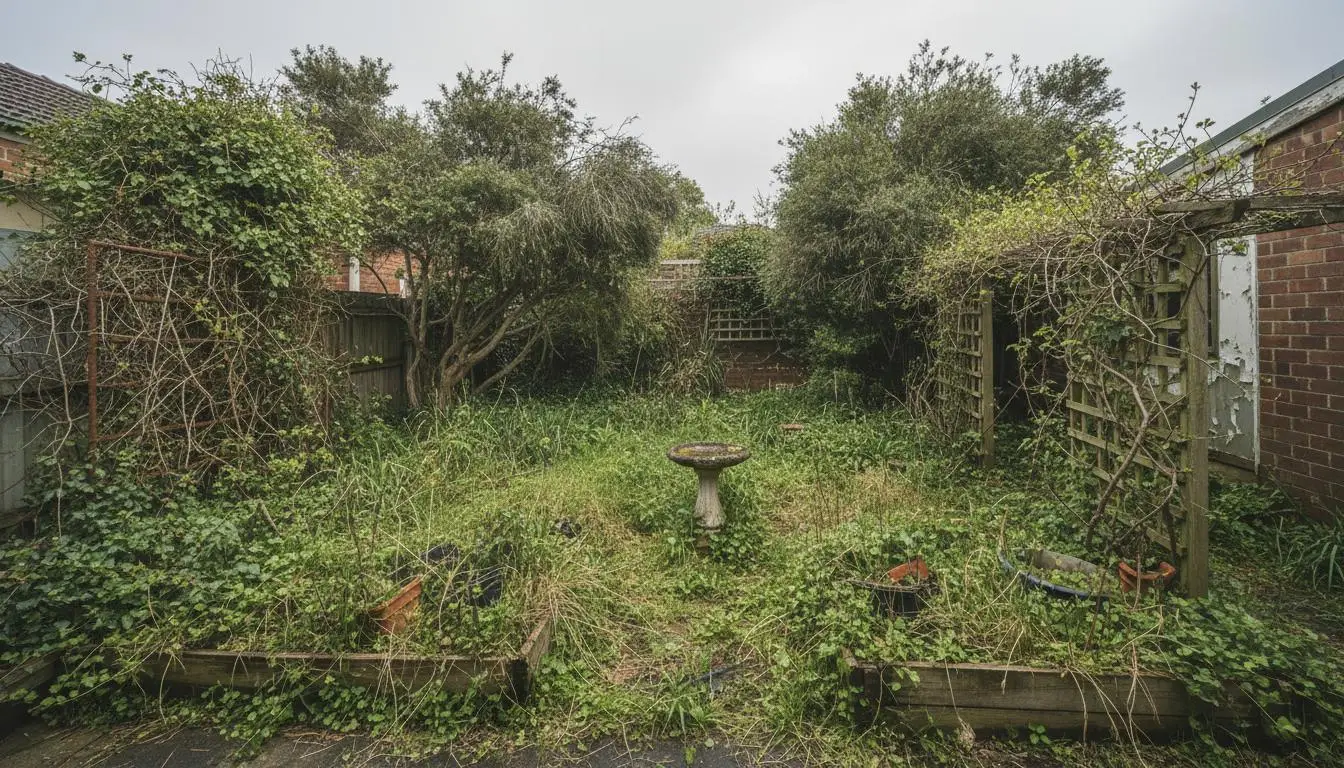
An overgrown garden is not a lost cause. It is a garden with momentum pointing the wrong way. Here is how to assess what is worth saving, clear what is not, and bring the space back under management.
How Do You Start Recovering an Overgrown Garden?
An overgrown garden needs a clear assessment before any cutting begins: walk the entire space, identify what is worth saving, and understand what created the problem before deciding what to remove. In 27 years of recovering neglected gardens across Melbourne's eastern suburbs, I have learned that the first hour of looking is worth more than the first day of cutting.
The instinct with an overgrown garden is to start hacking immediately. I understand the impulse, the mess feels urgent, and the quickest relief is visible progress. But rushing the assessment phase is how you lose a twenty-year-old camellia that was hidden under jasmine, or cut back a wisteria that turns out to be the best feature in the garden once freed from competing growth. I have made that mistake exactly once, early in my career on a property in Canterbury, and I still think about it.
What I do instead is spend the first visit simply walking and looking, which is the same approach we take during our initial consultation process. I am identifying structural plants: mature trees, established hedges, anything with a trunk thicker than my forearm. I am noting what is genuinely dead versus what is dormant or just stressed. I am reading the site: where does water collect, which walls get afternoon sun, where has the soil been compacted by years of neglect. This assessment shapes everything that follows, and it is the difference between a recovery that takes the garden forward and one that simply returns it to a blank slate.
What Should You Keep and What Should Go?
The most valuable things in an overgrown garden are almost always the things that have been there longest, mature trees, established root systems, and plants with structural bones beneath the mess. Removing these and starting fresh is rarely the right answer.
I think of it as triage. The first group is the keepers: mature trees, well-placed hedging, established climbers on sound structures, anything with heritage or sentimental value. These plants have years of irreplaceable growth, and the garden's character depends on them. Even if they look terrible right now, most can be brought back with skilled pruning over one to three seasons.
The second group is the genuinely problematic: invasive species like Japanese honeysuckle or wandering tradescantia, plants that are structurally unsound or diseased beyond recovery, and anything planted in a fundamentally wrong position, asun-loving plant under dense canopy, or a large tree two metres from the house. These need to come out, and there is no point sentimentalising them.
The third group, and this is where experience matters, is the borderline plants. The overgrown but not hopeless. The poorly placed but not dangerously so. I lean toward keeping more than removing, because you can always take something out later, but you cannot put back ten years of growth. A garden in Kew I recovered last year had an enormous Viburnum tinus that the owner wanted removed. I suggested we hard-prune it first. Six months later it was the best screening plant in the garden, and it would have taken a new plant eight years to reach the same size.
What Is the Right Way to Clear Overgrowth?
The most effective approach is to work in sections, starting with the boundaries and working inward, removing obvious weeds and dead material first before making any decisions about what stays. Systematic clearing prevents the overwhelm that causes most DIY recoveries to stall.
I always start by clearing paths and access first. You need to be able to move through the garden safely before you can work on it effectively. That means cutting back anything overhanging paths, clearing gates and access points, and creating a staging area for green waste. On a large property this alone can take a full day.
Then I work section by section, typically starting at the front boundary and moving toward the rear. Within each section, the order is always the same: weeds out first, then dead material, then selective clearing of the overgrowth to reveal what is underneath. I am careful about timing, if it is winter, I know that bare deciduous branches might look dead but are simply dormant, so I mark anything I am not sure about and come back in spring.
Green waste management is a practical consideration that catches people off guard. An overgrown garden generates an enormous volume of material. A standard suburban block might produce three to five cubic metres of green waste during a recovery, which is far more than your council green bin handles in a single collection. I plan waste removal in advance, either hiring a skip or arranging a trailer, because nothing stalls a garden recovery faster than running out of space to put the debris.
The temptation to use heavy machinery should be resisted on most suburban blocks. A bobcat or excavator can compact soil, damage tree root zones, and destroy the soil biology that your garden will need for recovery. Hand clearing is slower, but the results are invariably better.
Can Overgrown Shrubs Actually Be Saved?
Most overgrown shrubs can be rejuvenated through hard pruning, cutting back to 30 to 50 centimetres from ground level in late winter to force new growth from the base. The exceptions are plants that only grow from their tips, like most conifers and some native species, which rarely recover from severe reduction.
The technique I use most often is called renewal pruning: removing the oldest, thickest stems entirely at the base while leaving younger growth to form the new framework. This works exceptionally well on plants like abelia, viburnum, photinia, and most deciduous shrubs. The plant responds by pushing new growth from the base, and within one to two growing seasons you have a shrub that looks five years younger.
For hedges that have grown far beyond their intended dimensions, I take a different approach. Rather than cutting all sides at once, which can stress the plant severely and leave it looking bare for months, I reduce one side hard in the first year and the opposite side the following year. This allows the plant to recover with foliage on the untouched side while regenerating on the cut side. It takes longer, but the hedge never looks completely bare, and the success rate is significantly higher.
Timing matters. Late winter, just before spring growth begins, is the ideal window for hard pruning in Melbourne. The plant is about to enter its strongest growth period, wounds heal quickly in the warming temperatures, and you have a full growing season ahead for recovery. Avoid hard pruning in autumn or early winter, the plant cannot respond with new growth during the cold months, and exposed cuts are vulnerable to fungal infection in wet weather.
Why Does Soil Recovery Matter After Clearing?
Neglected soil is the hidden problem in every overgrown garden, years of leaf litter without management creates a thick, matted layer that sheds water rather than absorbing it, while the underlying soil often becomes compacted and biologically depleted. Restoring the soil is what separates a temporary cleanup from a genuine recovery.
After clearing, I always start with the soil. The first step is removing or breaking up any thick matted organic layer on the surface. Some of this material is useful, as well-decomposed leaf litter can be incorporated into the soil, but thick, thatchy layers need to come off so water and air can reach the root zone.
Then comes mulching, and this is where a cleared garden is genuinely vulnerable. All those bare soil surfaces that were previously covered by weeds are now exposed to sunlight, and the weed seed bank in the soil is ready to exploit that light. A proper mulch layer of 75 to 100 millimetres, applied promptly after clearing, is the single most important step in preventing the garden from returning to chaos within weeks. Research published in Frontiers in Agronomy in 2024 found that organic mulch can reduce soil evaporation by up to 50 percent, and in a garden recovery, that moisture retention supports the stressed plants you have just pruned while suppressing the weeds you have just removed.
I use coarse eucalyptus chip mulch for most recovery situations. It breaks down slowly, provides good coverage, and does not wash away in rain the way fine mulches can. Keep mulch clear of plant stems and trunks, mulch piled against bark creates the damp conditions that invite collar rot, which is the last thing a recovering plant needs.
How Do You Stop a Garden From Becoming Overgrown Again?
The difference between a garden that stays under control and one that gradually slips back into neglect is almost always the rhythm of maintenance, regular, seasonal attention rather than occasional intensive effort. Gardens do not become overgrown overnight; they drift there over months and years of small tasks deferred.
Monthly garden maintenance is the standard that I have found works for most suburban gardens. That rhythm catches problems before they compound: weeds are removed before they set seed, hedges are trimmed before they outgrow their space, and the small seasonal tasks, such as deadheading, light pruning, and mulch top-ups, happen consistently rather than being postponed into an overwhelming backlog.
The economics are worth understanding. A garden that receives consistent monthly maintenance typically costs significantly less per year than a garden that cycles between neglect and intensive recovery. It also maintains property value rather than eroding it, the Husqvarna Global Garden Report found that neglected gardens can reduce property prices by 5 to 15 percent, and in Melbourne's eastern suburbs where median house prices are substantial, that percentage represents a considerable sum.
Beyond the practical, there is something about regular attention that changes your relationship with a garden. When the space is managed, you use it more. You notice the seasonal changes. You see the first buds on the magnolia in August. A garden that you avoid because it feels overwhelming becomes a garden you spend time in because it feels good to be there.
The Turning Point
Every overgrown garden has a turning point, amoment, usually partway through the recovery, when you stop seeing the mess and start seeing the garden. It might be when the first section of newly mulched bed catches the light, or when a hard-pruned shrub pushes its first flush of clean new growth, or simply when you can walk through the space without pushing branches aside.
I have seen that moment hundreds of times over 27 years, and it never gets old. The garden was always there, underneath the neglect, waiting for someone to take the first step. If your garden needs recovery, our garden clean-up service is designed for exactly this.

Need Help With Your Garden?
Ready to put this advice into action?
Our diploma-qualified horticulturist and experienced team can help bring your garden vision to life. Book a free consultation to discuss your needs.
No pressure. No obligation. Just a conversation about your garden.