


Problem Solving
Garden Weed Control in Melbourne: Complete Guide
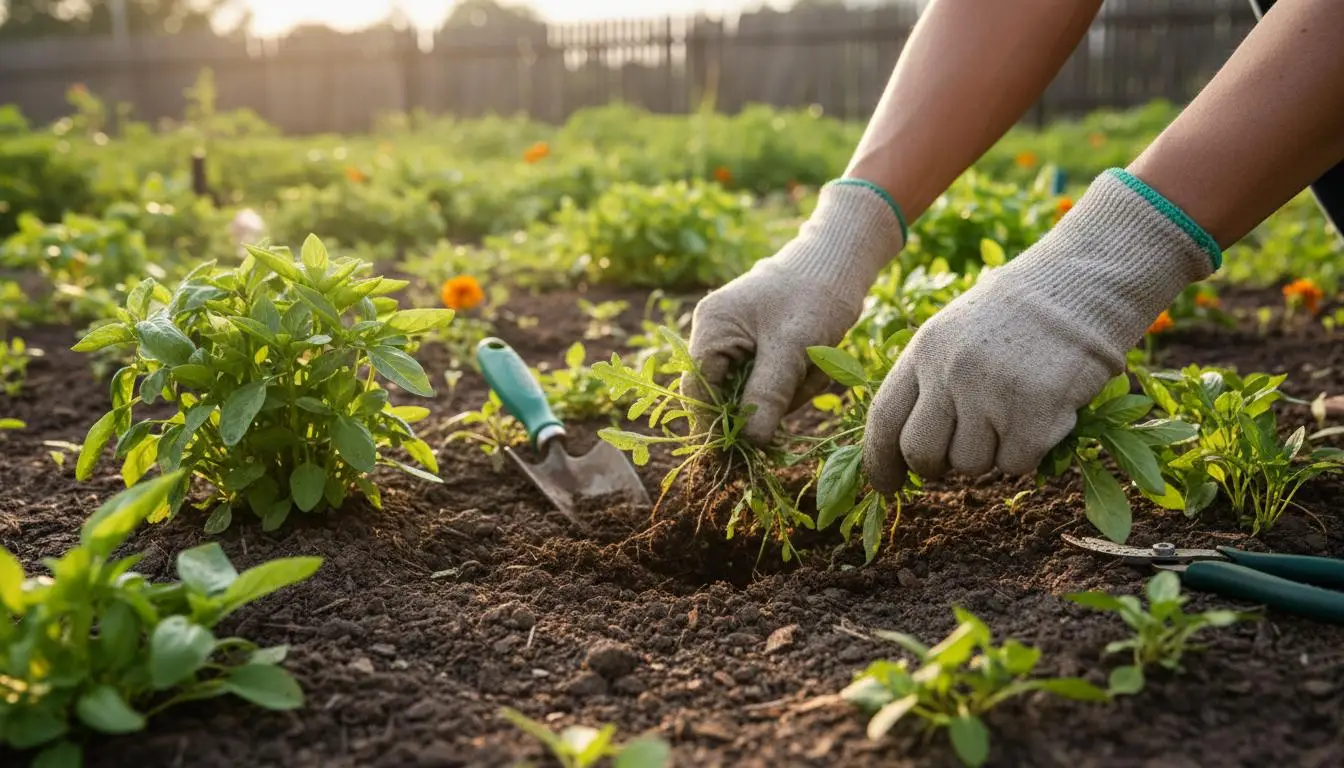
Melbourne gardens face weeds year-round, from winter grass germinating in April to bindii seeding in spring. Here is how to identify what you are dealing with and build a control strategy that actually lasts.
Why Do Weeds Thrive in Melbourne?
Melbourne's climate gives weeds almost no off-season, cool-season species germinate through autumn and winter while warm-season weeds take over from spring through summer, which means effective weed control requires year-round attention rather than a single seasonal blitz. In 27 years of managing gardens across Melbourne's eastern suburbs, the single most common mistake I see is treating weeds as a problem to solve once rather than a condition to manage continuously.
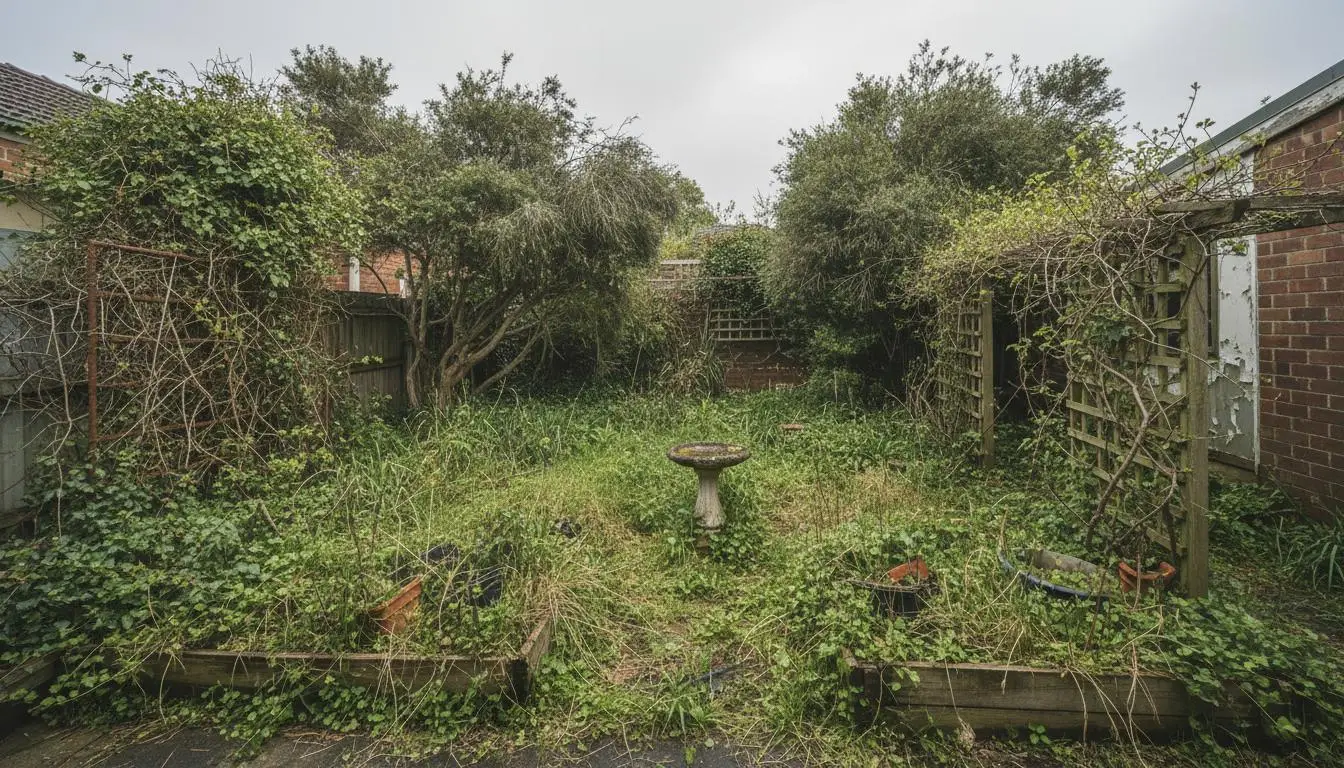
The reason weeds succeed is not that they are especially strong plants. It is that they are opportunists. Every gap in a garden bed, every thin patch of lawn, every bare strip along a fence line, weeds read those openings the way water reads a crack. Melbourne's combination of reliable winter rainfall and warm summers means there is always something germinating. A garden in Balwyn I took over several years ago had been professionally cleared of weeds just eight weeks before I first visited, but because no mulch was applied and no follow-up maintenance scheduled, the beds were already thick with new growth. The clearing had been effective. The strategy had not.
Understanding this changes how you approach the problem. Weed control is not a task you complete. It is a rhythm you maintain. And the tools you use matter far less than the consistency with which you use them.
Which Weeds Are You Actually Dealing With?
Identifying your weeds matters because different species require different timing and techniques, amethod that eliminates winter grass will do nothing to oxalis, and vice versa. Here are the weeds I encounter most frequently in Melbourne's eastern suburbs.
Bindii (Soliva sessilis) is the one that gets everyone's attention, because stepping on its spiny seed capsules barefoot is genuinely painful (Brisbane City Council, iNaturalist). It is a low-growing annual that germinates in autumn and produces seeds in spring. The critical control window is winter, before it flowers and sets those spiny seeds. Once the seeds are formed, you are managing the problem for next year, not this one.
Winter grass (Poa annua) is the pale-green, clumping grass that appears in lawns from April onward. It germinates when soil temperatures drop below about 20 degrees and seeds prolifically before dying off in summer. Pre-emergent control in late February to March is the most effective approach, though hand removal works for small infestations if you are diligent.
Oxalis (Oxalis pes-caprae), the soursob with yellow flowers and clover-like leaves, is one of the most persistent garden weeds in Melbourne. It spreads via tiny bulbils underground, and pulling it out without removing every bulbil simply distributes them further through the soil. I have seen oxalis infestations in Hawthorn gardens that have been "removed" annually for a decade without ever being truly controlled, because the method, hand pulling, was never going to address the bulbils.
Kikuyu (Pennisetum clandestinum) and couch (Cynodon dactylon) are aggressive running grasses that invade garden beds from lawns or neighbouring properties. Both spread through underground runners and above-ground stolons, and both require persistent physical removal or targeted herbicide application. Half measures with these grasses simply slow them down temporarily.
Onion weed (Nothoscordum gracile) produces clusters of white flowers and has the distinctive smell that gives it away. Like oxalis, it reproduces via bulb offsets, which makes hand removal frustrating, snap the stem and the bulb stays put, ready to reshoot.
Why Is Prevention More Effective Than Removal?
The most effective weed control strategy is one that prevents weeds from establishing in the first place, aproperly mulched and densely planted garden will suppress the vast majority of weeds without any active removal effort. Prevention outperforms removal by every measure: cost, time, environmental impact, and results.
Mulch is the foundation. A layer of 75 to 100 millimetres of coarse organic mulch blocks light from reaching weed seeds in the soil, which prevents germination. Research published in Frontiers in Agronomy in 2024 found that organic mulch can reduce soil evaporation by up to 50 percent, and while that study focused on moisture retention, the light-blocking effect on weed seeds is equally significant. In my experience, a well-mulched garden bed requires roughly a quarter of the weeding effort of an unmulched one.
Dense planting is the second layer of prevention. Where mulch blocks light at soil level, established plant canopies block light from above. A garden bed with good canopy coverage, where the foliage of adjacent plants overlaps, creates its own living weed suppression. The weeds that do germinate are competing for light with established plants that have larger root systems and better access to water and nutrients. Most lose that competition quickly.
Ground covers are the third element, and choosing the right ones is part of thoughtful planting design. In areas where you do not need height, such as under trees, along borders, or between stepping stones, low-growing ground covers like Myoporum parvifolium, native violets, or Dichondra repens form dense mats that physically exclude weeds. I use ground covers extensively in garden management because they convert a high-maintenance bare soil area into a low-maintenance living surface.
The old horticultural saying, "one year's seeding equals seven years' weeding," is not precisely quantified, but the principle is sound. Preventing a single generation of weeds from seeding eliminates years of future germination from the soil seed bank.
How Do You Remove Weeds Properly?
When removal is necessary, the technique matters as much as the effort. Pulling weeds without removing the entire root system, or hoeing at the wrong time, often makes the problem worse rather than better. Here is what I have found works consistently across thousands of hours of weeding.
Timing is everything. Weed after rain or after watering, when the soil is moist and root systems come out more completely. Weeding in dry, hard soil breaks roots and leaves the regenerative portions underground. For the same reason, I schedule weeding visits after rainfall when possible. The difference in effectiveness between weeding in moist soil versus dry soil is dramatic, what takes twenty minutes in moist soil can take an hour in hard ground, with worse results.
Complete root removal is essential for perennial weeds. Dandelions, dock, and other taproot weeds will regrow from any root fragment left in the soil. I use a narrow-bladed weeding knife that can follow the root down and lever the entire plant out intact. For bulbous weeds like oxalis and onion weed, a hand fork is more effective, working it under the bulb cluster and lifting the whole mass rather than pulling from the foliage.
For annual weeds, hoeing is efficient and satisfying. The technique is to slice the weed just below the soil surface, severing it from its root system. This works best on dry, sunny days, the severed weed desiccates quickly on the surface, and you can cover significant ground in a short session. Hoeing in wet weather or on overcast days is less effective because the severed weeds can sometimes re-root in moist soil.
Disposal matters. Weeds that have gone to seed should never go into your compost, most home compost systems do not reach temperatures high enough to kill weed seeds, and you end up distributing those seeds through your garden when you use the compost. Council green waste bins are the better option for seeding weeds, as commercial composting operates at temperatures that destroy seed viability.
When Should You Use Organic vs Chemical Methods?
Chemical herbicides have a place in weed management, but they should be a targeted tool rather than a default approach. Most weed problems in maintained gardens can be managed through mulching, manual removal, and good garden culture without any chemical intervention.
I reach for chemical options in specific situations: established infestations of bulbous weeds like oxalis where manual removal has proven insufficient, invasive grasses like kikuyu that have penetrated deep into garden beds, and large-scale clearing where the volume of weeds makes hand removal impractical. In these cases, a selective or carefully applied non-selective herbicide is genuinely the most effective tool.
Selective herbicides target specific weed types while leaving others unharmed. Broadleaf-selective herbicides, for instance, can remove clover and bindii from a lawn without damaging the grass. These are most effective when weeds are actively growing and have enough leaf surface to absorb the product. Applying selective herbicide to bindii in winter, before it flowers, is one of the most reliably effective chemical interventions in Melbourne lawn care.
Non-selective herbicides, primarily glyphosate-based products, kill any vegetation they contact. These require careful, targeted application. I use them sparingly and precisely: painting onto individual weed foliage rather than spraying broadly, avoiding any drift onto desirable plants, and never applying before rain. The environmental profile of glyphosate is debated, and I respect clients who prefer to avoid it entirely. In most cases, there are effective alternatives.
Organic alternatives like boiling water and household vinegar work on annual weeds and weeds in hard surfaces, such as paths, driveways, and between pavers, but they are contact killers only. They burn the top growth without reaching root systems, so perennial weeds reshoot. They are useful tools, but not solutions for established infestations. I would not rely on vinegar to deal with a serious oxalis problem, for instance.
How Do You Control Weeds in Melbourne Lawns?
A thick, healthy lawn is its own best weed defence, and regular lawn mowing at the right height helps dense turf grass crowd out weed seedlings by blocking light at soil level and outcompeting them for water and nutrients. Most lawn weed problems are symptoms of a lawn that is struggling, not a weed that is exceptionally aggressive.
Mowing height is the single most impactful cultural practice. Most warm-season grasses, including buffalo, couch, and kikuyu, should be mowed at 30 to 40 millimetres. Cutting lower than this thins the canopy and exposes soil to light, which is an invitation to weed seeds. I see this constantly: a homeowner scalps their lawn because they think shorter looks tidier, and within six weeks the lawn is full of winter grass or bindii. The irony is that a slightly longer lawn looks denser, greener, and, counterintuitively, neater than a scalped one because it forms a more uniform surface.
Fertilising regularly keeps the grass vigorous and competitive. An underfed lawn lacks the density to suppress weeds. A balanced slow-release fertiliser applied in early spring and again in late summer provides consistent nutrition through the growing seasons. Organic options, such as composted chicken manure and seaweed extracts, are also effective and improve soil biology over time.
Addressing bare patches promptly is critical. Any gap in the lawn surface will be colonised by weeds within weeks. Oversowing with matching turf grass seed, or plugging with runners from a healthy area of the lawn, closes these opportunities before weeds can exploit them.
For lawns where weeds have already established, targeted selective herbicide application in the appropriate season is the most practical approach. But it should always be followed by cultural improvements, such as better mowing practice, appropriate fertilising, and soil aeration if compacted, that address why the weeds gained a foothold in the first place. Herbicide without cultural change is just a cycle of treatment and re-infestation.
The Long Game
The gardens I manage that have the fewest weed problems are not the ones that have been treated most aggressively. They are the ones where the fundamentals are right, good mulch coverage, dense planting, healthy soil biology, and consistent monthly attention that catches problems early.
There is no single action that eliminates weeds permanently, which is why our weeding service is a core part of every maintenance program. But there is a compounding effect to doing the right things consistently: each season of good mulching reduces the viable seed bank in the soil, each year of dense planting closes more gaps, each monthly visit prevents another generation from seeding. After two to three years of consistent management, the weeding component of a garden visit shrinks from a major task to a minor one.
That is the shift worth working toward: not a garden where weeds never appear, but a garden where they never gain momentum.
Need Help With Your Garden?
Ready to put this advice into action?
Our diploma-qualified horticulturist and experienced team can help bring your garden vision to life. Book a free consultation to discuss your needs.
No pressure. No obligation. Just a conversation about your garden.