
Local Area Guides
Surrey Hills Garden Design: Making the Most of Your Space
Surrey Hills offers larger blocks, a mix of period and mid-century homes, and a family-oriented character that shapes how gardens are used. Here is what works, and what to avoid, based on decades of working in this suburb.
What Defines a Surrey Hills Garden?
Surrey Hills gardens are defined by the suburb's generous block sizes, its mix of architectural periods from Victorian through mid-century to contemporary, and a family-oriented community where gardens are genuinely used rather than simply looked at. This combination of space, variety, and active use makes garden design here both more rewarding and more demanding than in many Melbourne suburbs.
Sitting within the City of Whitehorse, Surrey Hills has a character distinct from the inner-eastern suburbs I also work in. The blocks are typically larger, as many original quarter-acre allotments survive even as subdivision has reduced some, and this extra space changes what is possible. You can include elements that are impractical in Hawthorn or Camberwell: a proper kitchen garden, a large-scale feature tree, play space that does not consume the entire rear yard. The challenge shifts from what can you fit to what should you prioritise.
The architectural mix is the other defining feature. Walk down a Surrey Hills street and you will pass a Victorian villa, an interwar bungalow, a 1960s modernist design, and a recent contemporary build, all within a few hundred metres. Each architectural style calls for a different garden approach, and one of the more common mistakes I see is a garden that ignores its house, astark modernist planting in front of an Edwardian cottage, or a fussy cottage garden around a clean-lined contemporary home. The garden does not need to slavishly replicate the house's era, but it should be in conversation with it.
How Should You Approach a Period Garden in Surrey Hills?
Period gardens in Surrey Hills, whether Victorian, Edwardian, or interwar, benefit from a design approach that respects the formality and structure of the era while accommodating contemporary use patterns. The best results come from keeping the front garden sympathetic to the house's character while allowing the rear garden to evolve more freely.
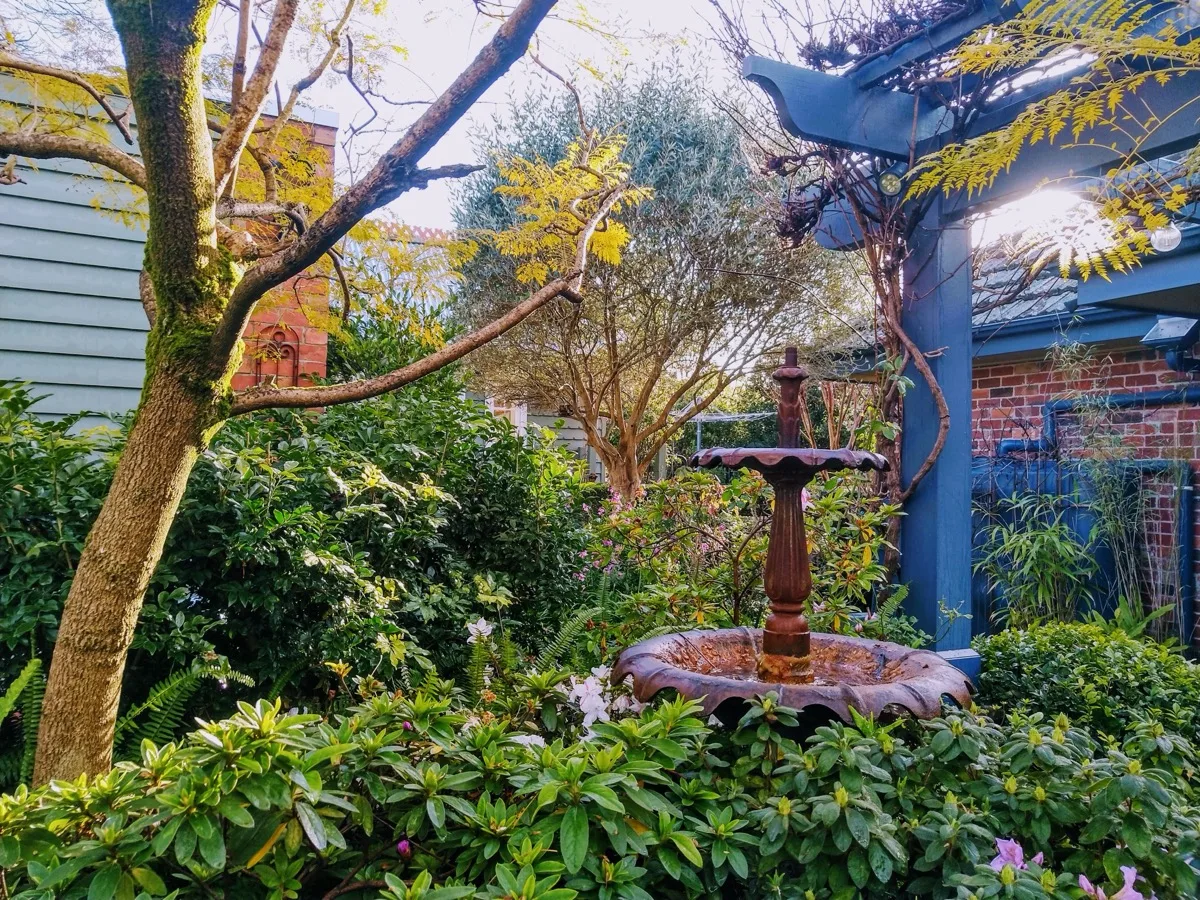
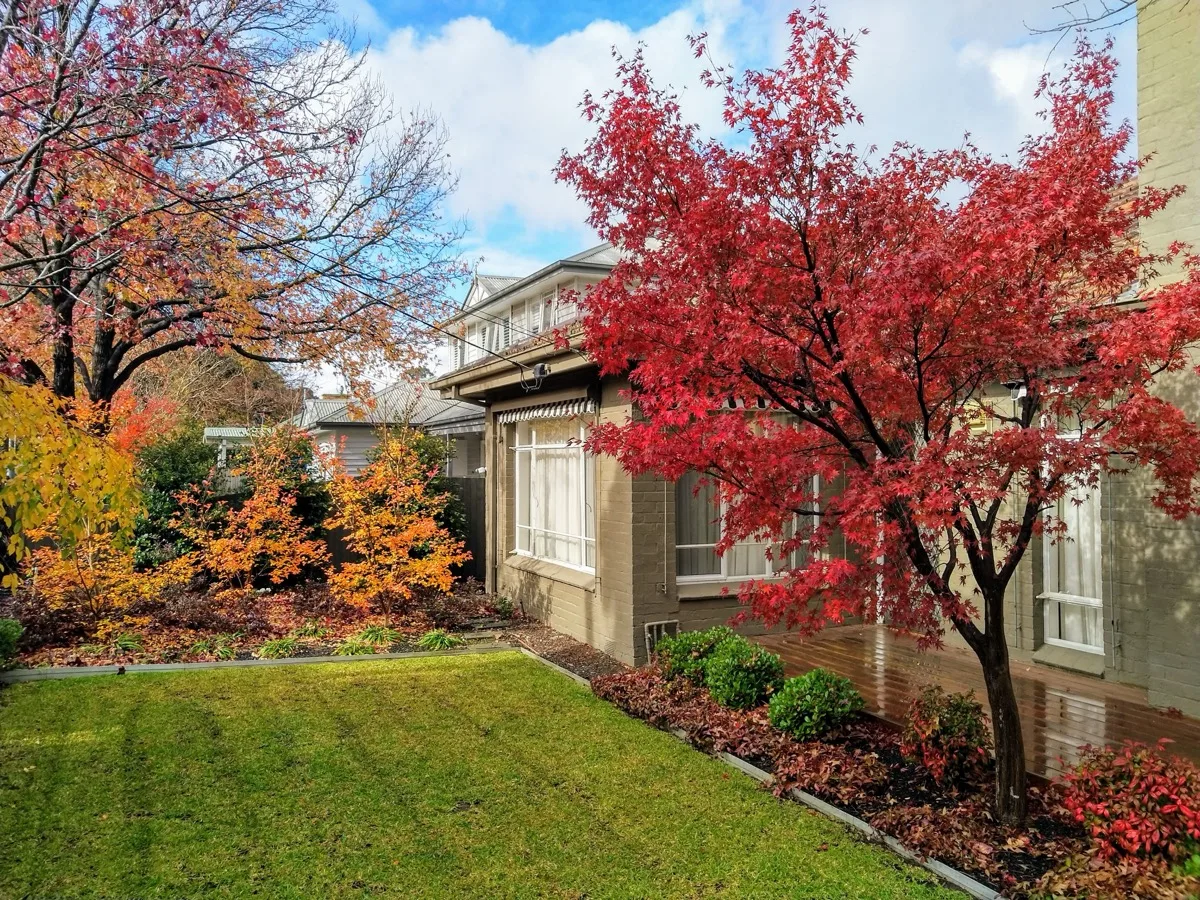
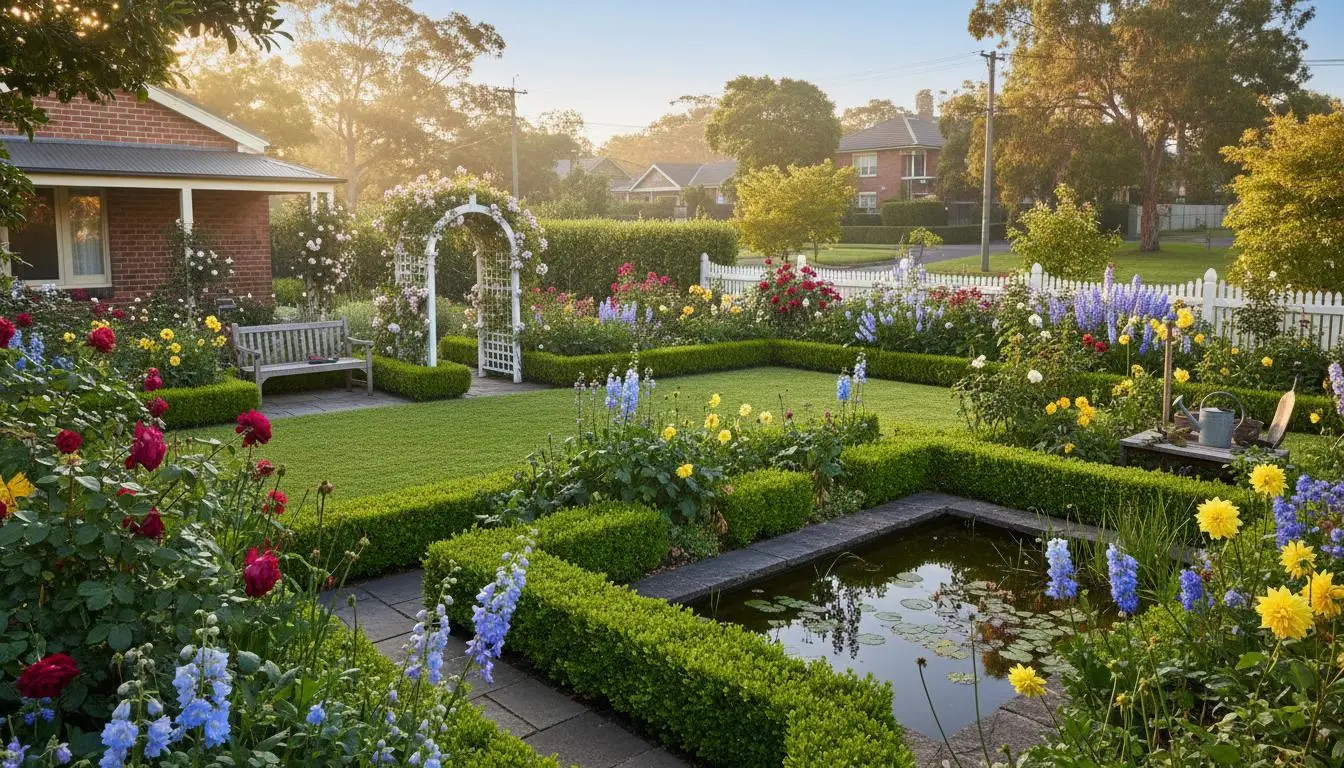
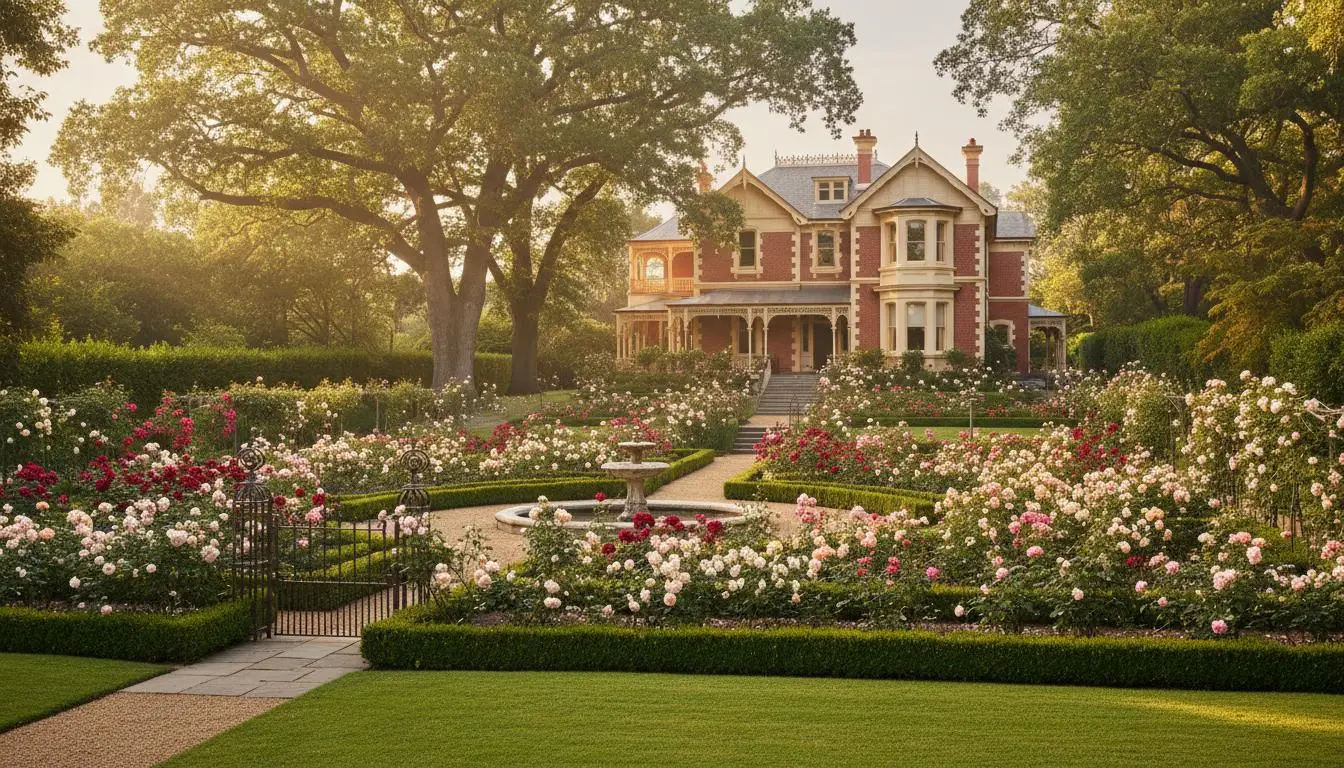
The front garden is the public face, and in Surrey Hills the streetscape matters. Period homes sit best behind gardens with some formal structure: a defined path to the front door, clipped hedging or a low fence with planting behind it, and a planting palette that suits the era. For Victorian and Edwardian homes, this typically means English box hedging (Buxus sempervirens), roses, camellias, and a deciduous feature tree, such as a Japanese maple, a Cornus, or a small ornamental pear. For interwar bungalows, the palette can shift slightly toward Australian species, including grevilleas, correas, and westringias, that complement the era's emerging national identity.
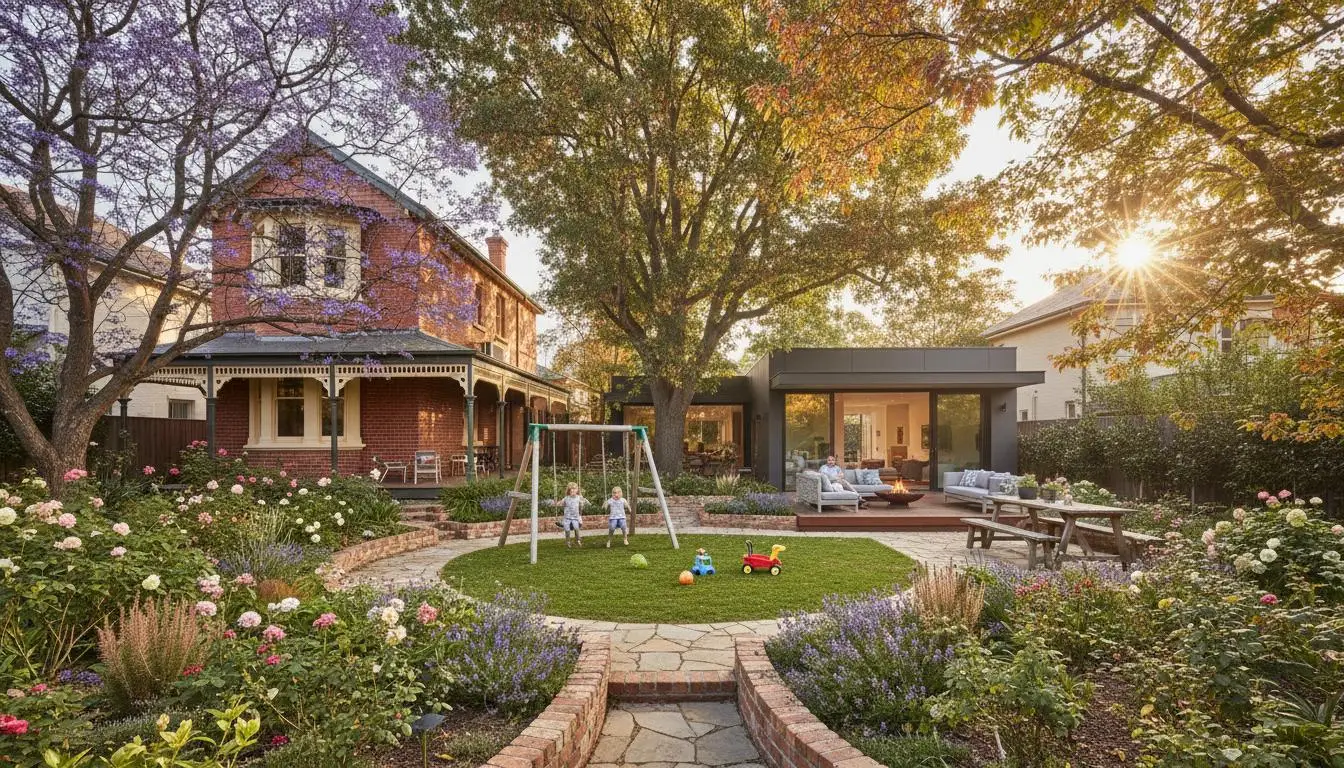
The rear garden is where I encourage more flexibility. Period homes were built with large rear gardens intended for productive use: vegetable plots, fruit trees, clotheslines. Modern families use these spaces differently: outdoor entertaining, children's play, the family dog. Designing the rear garden to accommodate these contemporary needs while maintaining some period elements, such as a heritage fruit tree, a perennial border along the fence line, or a lawn defined by clean edges, creates a space that feels connected to the house without being a museum piece.
One specific consideration for period homes in Surrey Hills: many have been extended at the rear, sometimes more than once. These extensions often change the relationship between house and garden, anew living space opens onto what was previously the middle of the garden, or a kitchen extension absorbs what was the service yard. When I am designing or redesigning a garden around an extended period home, I start by understanding how the house now functions, not how it originally functioned. The garden needs to serve the current house, even if the front facade belongs to a different century.
What About Mid-Century and Modern Properties?
Surrey Hills has a notable concentration of mid-century properties from the 1950s through 1970s, and these require a garden approach that is distinct from both heritage and contemporary design: clean lines, restrained plantings, and a strong connection between indoor and outdoor space.
Mid-century architecture emphasised the relationship between inside and outside: large windows, sliding doors opening to courtyards, living spaces oriented toward the garden. The most successful gardens I have managed around these homes respect this intent. The planting is structural rather than ornamental: clumping grasses, architectural shrubs like Rhaphiolepis or Nandina, ground covers that create clean masses of texture rather than busy mixed borders. Hard surfaces, such as exposed aggregate paths, simple paving, and gravel, complement the period's material palette.
For contemporary builds, which are increasingly common in Surrey Hills as older homes are replaced or sites subdivided, the garden design often needs to respond to a smaller footprint. Where a period home might sit on 700 to 900 square metres, a new townhouse might occupy 300. The principles change: vertical interest becomes more important than horizontal spread, every element needs to earn its space, and screening from neighbours takes priority over open views.
In both cases, I find that restraint produces the best results. A few well-chosen plants in the right positions, properly maintained, will always look better than a crowded collection trying to fit too much into the space. One superb Magnolia grandiflora 'Little Gem' in a courtyard garden makes more impact than a dozen different species competing for attention.
How Do You Design a Garden That Works for a Family?
A family garden needs to accommodate children's play, outdoor entertaining, pets, and the practical realities of daily life, all while remaining a space that adults enjoy spending time in. The key is designing for how the family actually lives rather than how a garden magazine suggests they should.
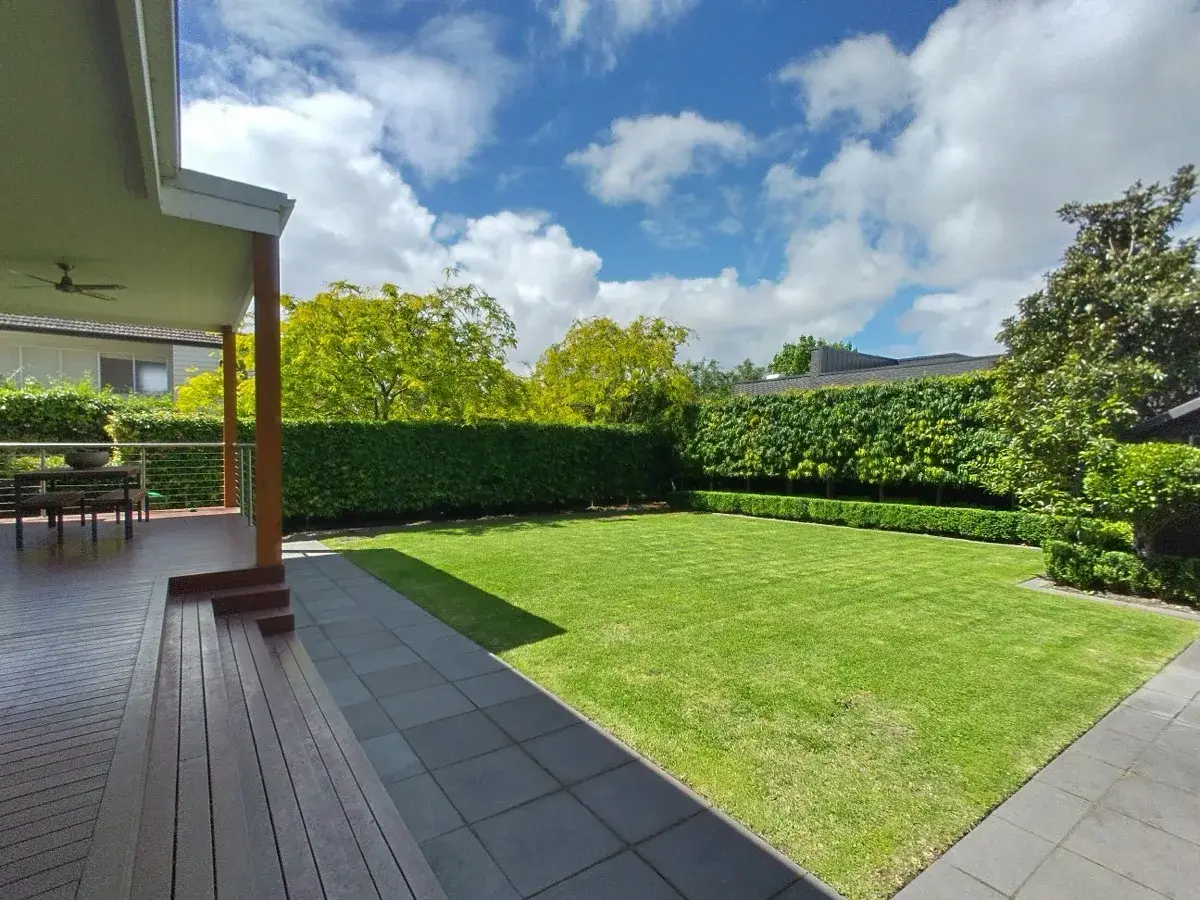
Surrey Hills is strongly family-oriented, and the gardens I manage here reflect that. The most successful family gardens share several characteristics: a durable lawn area large enough for a game of cricket or a dog to run, defined garden beds that are robust enough to survive an errant football, outdoor seating that transitions easily from children's afternoon tea to adult evening entertaining, and enough screening to create a sense of enclosure without making the space feel small.
I design family gardens with an awareness that children's needs change. The toddler who needs soft fall under a swing set becomes the ten-year-old who wants a cricket pitch becomes the teenager who wants a fire pit and outdoor seating. Building flexibility into the design, with a lawn area that serves all these purposes, garden beds positioned to frame the space rather than divide it, and infrastructure like power and water in locations that support future changes, means the garden evolves with the family rather than requiring a complete redesign every few years.
Edible gardens are a strong thread in Surrey Hills. Many clients want fruit trees, a vegetable patch, or at minimum a herb garden near the kitchen. I position productive plantings where they receive the best sun, typically the northern or western boundary, and integrate them into the broader garden design rather than isolating them in a separate "veggie patch." A well-maintained espaliered apple or pear along a fence line is both productive and ornamental. Raised timber beds for vegetables can be designed to complement the garden's aesthetic rather than looking like an afterthought.
The practical consideration that many garden designers overlook is storage. Families accumulate things, including bikes, scooters, sporting equipment, and tools, and a garden that looks beautiful but has nowhere to put anything will not stay beautiful for long. I always include screening for bins and storage, a dedicated area for bikes or toys, and enough hard surface near the back door for muddy boots and wet dogs.
How Do You Make the Most of Surrey Hills' Larger Blocks?
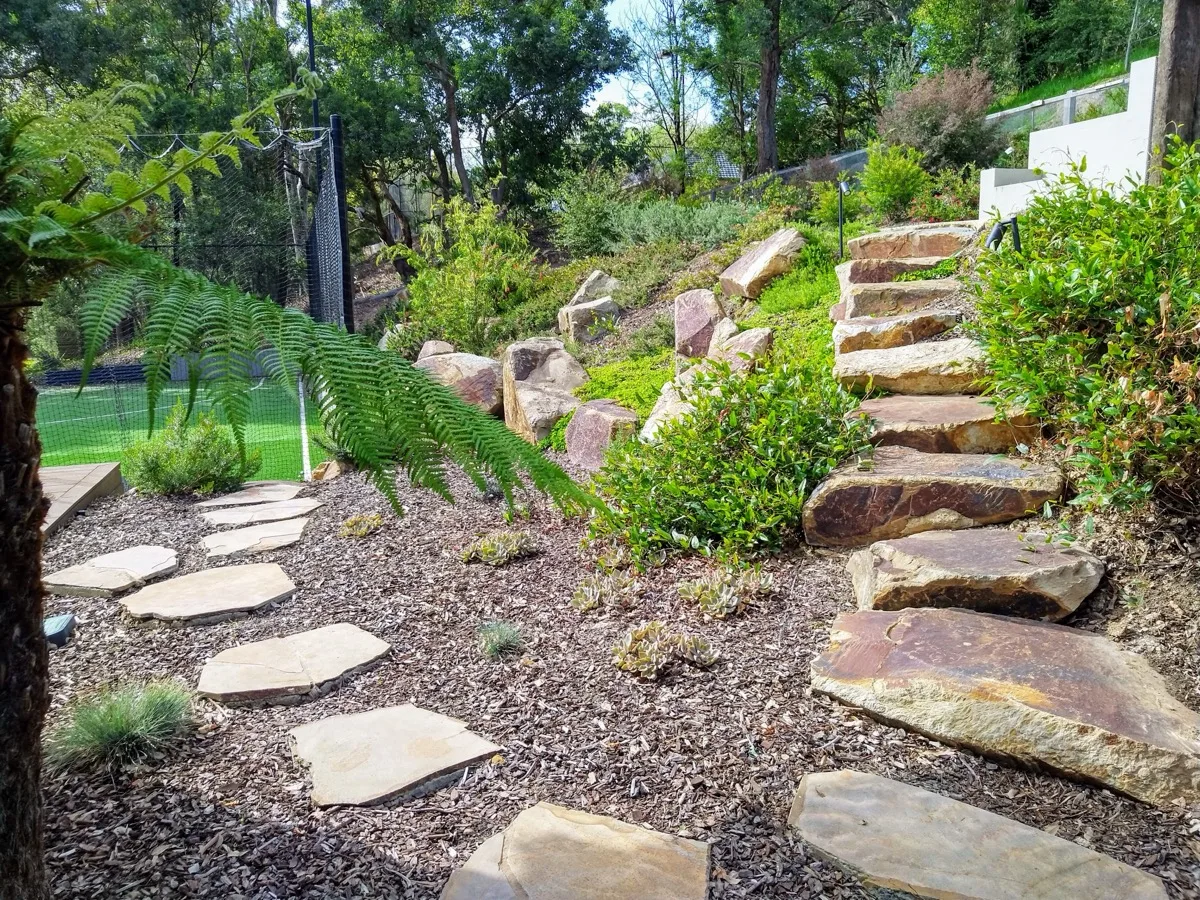
The generous block sizes that characterise much of Surrey Hills create an opportunity that many homeowners underuse: the space to create distinct garden zones that serve different purposes, connected by thoughtful transitions rather than simply being one large open area.
A well-designed large garden has structure. I think of it as a series of rooms: the arrival space at the front, the primary outdoor living area adjacent to the house, the secondary garden beyond that, perhaps a quieter seating area or a productive garden, and the boundary planting that screens and encloses. Each zone has its own character and purpose, but they flow together as a cohesive whole.
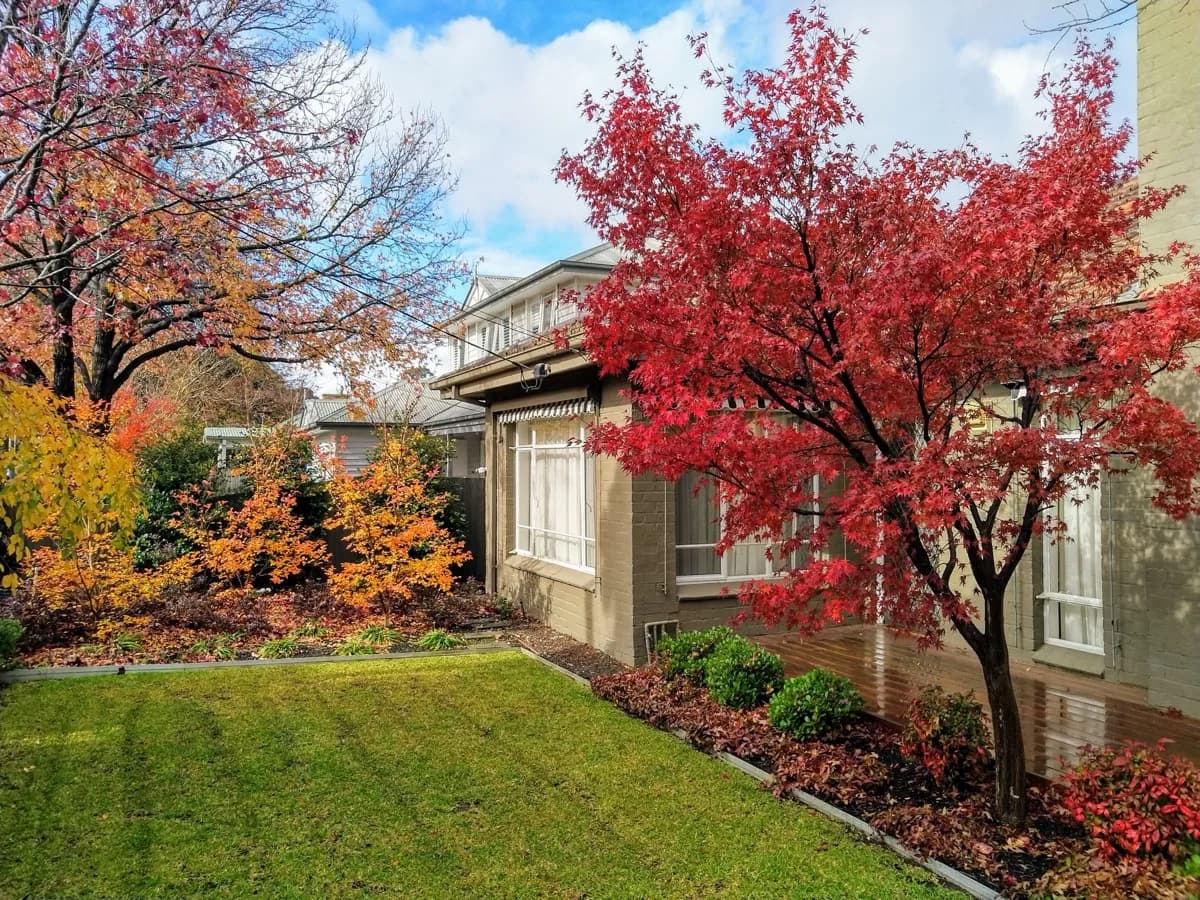
Feature trees are the element that large blocks make possible and that nothing else can replicate. A Liquidambar styraciflua or a Zelkova serrata in the right position transforms a garden, providing shade, seasonal colour, vertical scale, and a sense of permanence. These trees need space: a mature liquidambar can reach 15 metres with a canopy spread of 8 to 10 metres. In Surrey Hills, unlike the tighter inner suburbs, that space exists. I plant feature trees with their mature size in mind, positioning them where they will provide shade to outdoor living areas in summer while allowing winter sun to reach the house when they drop their leaves.
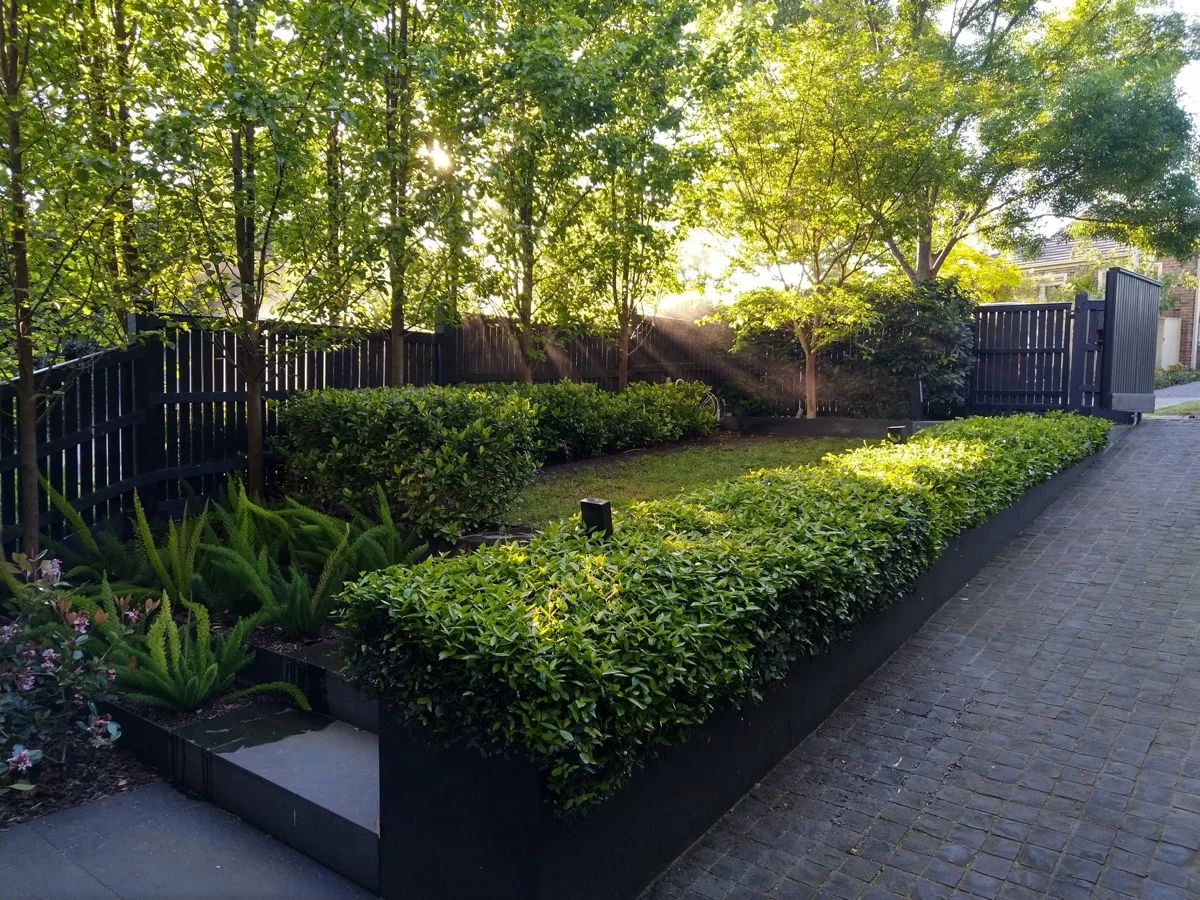
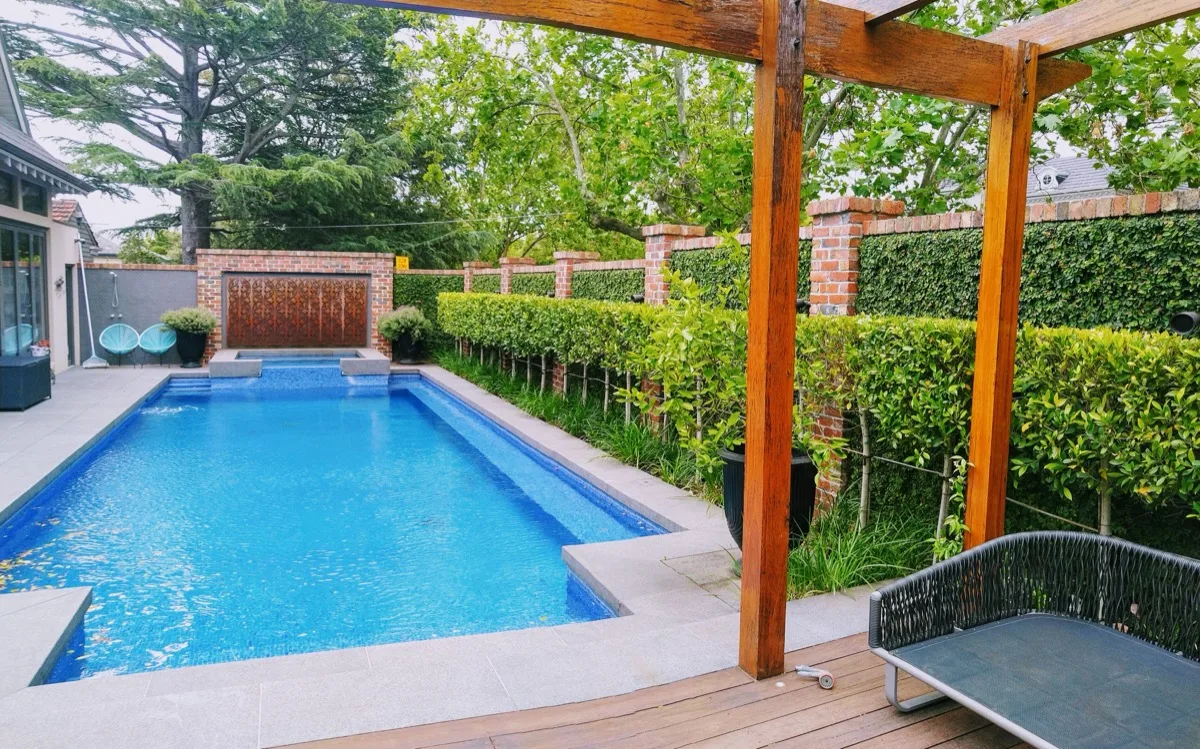
Screening is the other advantage of larger blocks. Where a Hawthorn garden might plant a single row of Pittosporum against the fence and hope for the best, a Surrey Hills garden can create a layered buffer: a tall backdrop of established screening, such as Waterhousia floribunda or Lophostemon confertus for evergreen density, with an understory of mid-height shrubs and a ground layer beneath. This layered approach provides more effective screening, better habitat value, and a much more attractive boundary than a single-species hedge.
The temptation with a large garden is to fill it, and I frequently advise clients against this impulse. Open space, whether lawn, gravel, or a cleared area beneath a feature tree, is as important to garden design as the planted areas. It provides visual rest, functional flexibility, and the sense of calm that a crowded garden can never achieve. Some of the finest gardens I manage in Surrey Hills are the ones where restraint has created breathing room around the key elements.
What Are the Local Growing Conditions?
Surrey Hills sits on similar geology to the broader eastern suburbs, with predominantly sandy loam soils, reasonable drainage, and a slightly acidic pH, but the suburb's elevation, aspect, and established plantings create conditions that are worth understanding before making planting decisions.
The soil across most of Surrey Hills is workable and forgiving. It holds moisture adequately without waterlogging, and it responds well to organic improvement, regular mulching gradually builds the humus content and soil biology that drive healthy plant growth. Where I find challenges is on properties that have been heavily developed: construction often strips or compacts the topsoil, and a new garden on a recently built property may need significant soil preparation before planting. Importing quality garden mix, incorporating compost, and establishing a mulching regime from day one can transform poor construction-grade soil into productive garden soil within two to three years.
Melbourne's permanent water-use rules apply uniformly across Surrey Hills: watering systems, including sprinklers, drip systems, and automatic irrigation, can operate only between 6 pm and 10 am, while hand-held watering with a trigger nozzle is permitted at any time (Melbourne Water). For larger gardens, efficient irrigation design is important. I favour drip irrigation in garden beds, which delivers water directly to root zones with minimal waste, and well-designed sprinkler coverage for lawns timed to run within the permitted window.
Mulching is the single highest-impact practice for water-efficient garden management. Research published in Frontiers in Agronomy in 2024 found that organic mulch can reduce soil evaporation by up to 50 percent. In a suburb where garden beds can be extensive, that reduction represents a substantial saving in both water use and supplementary irrigation time. I apply 75 to 100 millimetres of coarse eucalyptus chip mulch across all garden beds, keeping it clear of plant stems and trunks, and top it up annually in late autumn or early spring.
The established tree canopy in the older parts of Surrey Hills creates shade conditions similar to Camberwell, though typically less extensive. Under-canopy planting, using shade-tolerant species like clivias, hellebores, Trachelospermum jasminoides (star jasmine) as ground cover, and ferns, works well in these areas. The newer parts of the suburb and recently developed properties often have full sun exposure, which opens up the palette to sun-loving species: roses, lavender, salvia, and ornamental grasses.
A Suburb That Gardens
What strikes me most about Surrey Hills, after decades of working there, is that it is a suburb where people genuinely engage with their gardens. Children play in them. Families eat in them. Neighbours talk over the fence about what is flowering. There is an unpretentious quality to Surrey Hills gardens that I find appealing, they are not showpieces; they are lived in.
That quality of use shapes how I approach garden management here. A Surrey Hills garden needs to be robust enough for a family, attractive enough to contribute to the streetscape, and well-maintained enough to hold its value, the Greener Spaces Better Places and Domain Plant Value Report found that quality landscaping can increase property value by up to 15 percent. But above all, it needs to work for the people who use it every day.
The best garden is the one you spend time in. In Surrey Hills, the space and the character exist to make that possible. The garden management just needs to keep it that way. See our Surrey Hills garden maintenance page for more on how we work in this suburb.
Need Help With Your Garden?
Ready to put this advice into action?
Our diploma-qualified horticulturist and experienced team can help bring your garden vision to life. Book a free consultation to discuss your needs.
No pressure. No obligation. Just a conversation about your garden.