









Seasonal Garden Care
When to Prune Roses in Melbourne: A Month-by-Month Guide
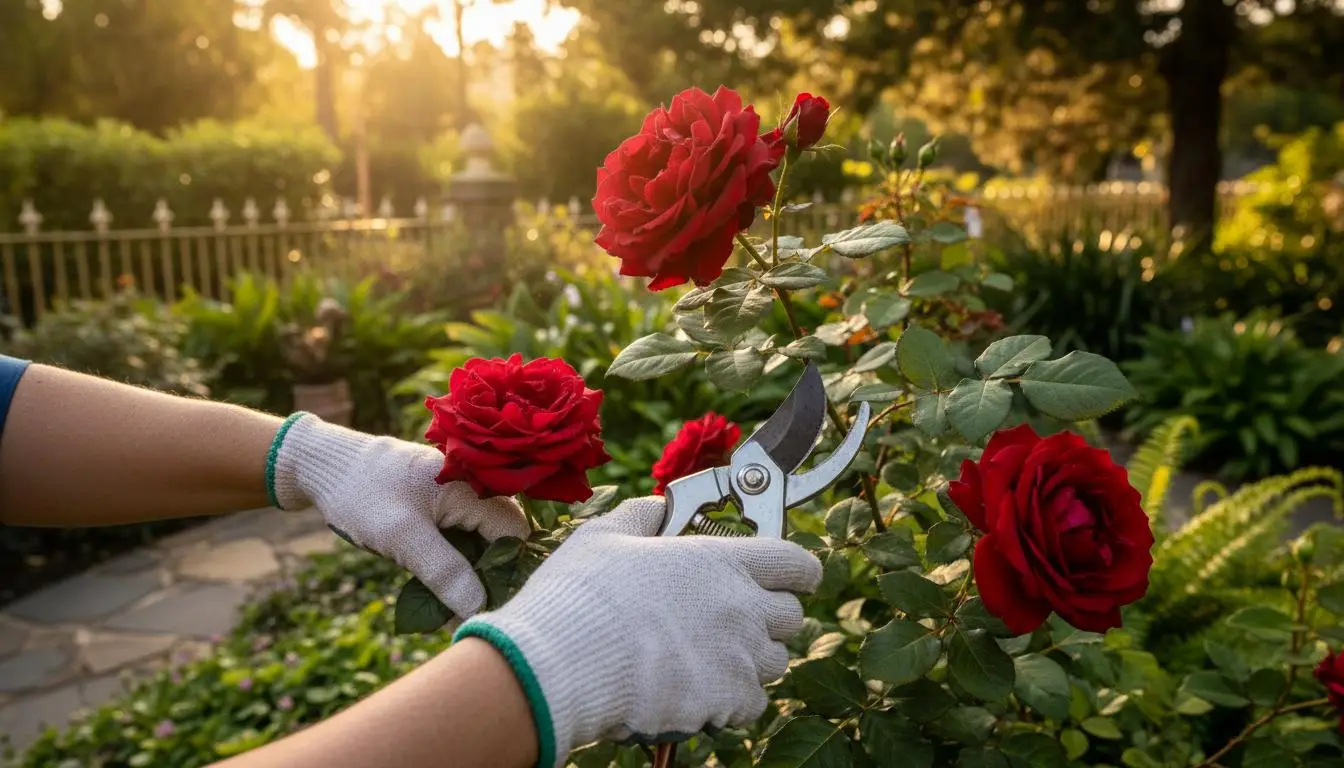
Master the art of rose pruning with our comprehensive seasonal calendar. Learn exactly when to prune different rose varieties for maximum blooms and healthy growth.
Introduction
The best time to prune most roses in Melbourne is late June to early July, during full winter dormancy. The Rose Society of Victoria recommends this window for hybrid teas and floribundas, and in 27 years of managing gardens across Melbourne's eastern suburbs, I've found their guidance holds true every season.
Timing matters more than technique with roses. I've seen beautifully executed pruning cuts on a garden in Hawthorn completely undone because they were done in late May, three weeks too early, which is why understanding seasonal garden maintenance is so important. The warm spell that followed triggered a flush of tender new growth, and a sharp frost in mid-June killed every emerging shoot back to the wood. The owner had to wait an entire season to recover what should have been a straightforward winter prune. That experience taught me early on: patience with roses always pays off.
Why Does Timing Matter So Much?
Pruning roses at the wrong time can remove developing flower buds, stress the plant making it vulnerable to disease, stimulate new growth that frost can damage, and waste the plant's energy on unnecessary regrowth. The right timing encourages vigorous new growth, maximises flower production, maintains plant health and shape, and prevents pest and disease problems.
Melbourne's climate gives us a distinct advantage here. Our cool winters are cold enough to trigger proper dormancy but mild enough that roses rarely suffer winter kill. That dormant window, when the plant's energy is stored safely in the roots, is exactly when we want to make our cuts.
When Should You Prune in Winter? (June-August)
Winter is the primary pruning season for most rose varieties in Melbourne. During dormancy, the plant's energy is stored in the roots, making it the ideal time for hard pruning. I look for the buds to be swelling but not yet breaking, that's the signal that the plant is ready.
Hybrid Tea and Floribunda Roses should be pruned hard in late June to early July: remove all dead, diseased, and damaged wood, cut back remaining canes to 30-40cm from the ground, remove any crossing branches that rub together, and aim for an open vase shape with 3-5 main canes.
David Austin and English Roses need a gentler approach: remove dead and weak growth, reduce height by one-third, thin out crowded centres, and maintain the natural shrub shape. I find people often prune these too hard, they're bred to be generous shrubs, and they perform best when you respect that habit.
What About Spring Care? (September-November)
As new growth emerges in September, remove any frost-damaged tips, apply complete rose fertiliser, begin regular pest monitoring, and water deeply as weather warms. This is when the results of good winter pruning become visible, strong, outward-facing shoots emerging from clean cuts.
During the first flowering in October, deadhead spent blooms to encourage repeat flowering, watch for aphids and black spot, maintain consistent watering, and apply liquid seaweed tonic.
As temperatures rise in November, deep mulch to retain moisture, increase watering frequency, continue deadheading, and monitor for spider mites in hot weather.
How Should You Handle Summer? (December-February)
Melbourne summers can be challenging for roses. Water deeply 2-3 times per week as outlined in our summer watering guide, mulch heavily to keep roots cool, deadhead regularly, and avoid pruning except for removing spent flowers.
During the hottest month of January, focus on watering and mulching, remove dead flowers only, watch for powdery mildew in humid conditions, and provide afternoon shade if possible. This isn't the season for intervention, it's the season for support.
What About Autumn Preparation? (March-May)
Many roses flower beautifully in autumn, and some of the best displays I see across our managed gardens happen in March and early April. Deadhead to extend flowering, reduce watering as temperatures cool, apply autumn fertiliser low in nitrogen, and begin planning winter pruning.
As growth slows in April, allow final flowers to set hips, reduce watering significantly, clear fallen leaves to prevent black spot, and take hardwood cuttings for propagation.
Before winter arrives in May, apply final mulch layer, protect vulnerable varieties, clean and sharpen pruning tools, and plan your winter pruning schedule.
What Tools Will You Need?
Quality tools make pruning easier and more effective. If you'd prefer to leave pruning to the professionals, we handle rose care as part of our seasonal programs. Essential tools include bypass secateurs (Felco or ARS recommended), long-handled loppers for thick canes, pruning saw for old wood, thick gardening gloves, and disinfectant spray. I clean my secateurs with methylated spirits between each rose, it takes an extra minute per plant and prevents the spread of disease from one bush to the next.
Conclusion
Every rose variety has its own rhythm, but they all share one thing: they reward patience. Wait for true dormancy, make clean cuts with sharp tools, and let the plant tell you what it needs through the rest of the year. If you're unsure about your garden's needs, schedule a free consultation and we'll walk through your roses together. The roses that look effortless in October were set up by someone who paid attention in June.



Need Help With Your Garden?
Ready to put this advice into action?
Our diploma-qualified horticulturist and experienced team can help bring your garden vision to life. Book a free consultation to discuss your needs.
No pressure. No obligation. Just a conversation about your garden.